
Growing cracks in walls or concrete
Take dated photographs and note changes in width, direction and position. Ask what evidence supports the proposed repair and whether an independent structural assessment is appropriate.
Notice changes around your floors, walls or doors? Learn what observations are worth documenting before an evaluation.
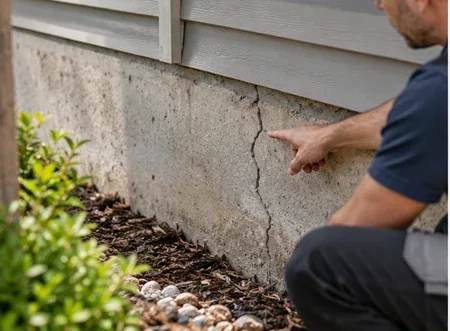
A crack alone does not establish structural failure. Movement, width, location, water conditions and changes over time help determine the next step.
Take dated photographs and note changes in width, direction and position. Ask what evidence supports the proposed repair and whether an independent structural assessment is appropriate.
Document where the problem occurs and whether nearby windows or trim have shifted. These symptoms may have several causes; an inspection helps distinguish them.
Check where runoff and downspouts discharge. Gutter and downspout work may be part of moisture management alongside any structural recommendation.
Ask for the observed cause, repair design, monitoring plan, permit requirements and written scope before authorizing invasive structural work.
Keep these details nearby so your first call is more useful.
No. Some cracks are cosmetic; movement, width changes, and location affect what evaluation is appropriate.
It can. Ask whether grading, soil moisture, or runoff is contributing to the issue.
Choose a specific job for focused guidance, or call the main service line.
Find common repairs, installations and specialty work. Call to confirm what is available.
Examples of work to discuss, not a guarantee of provider coverage. Confirm availability, scope, licenses where required, and pricing.
Foundation concerns can appear as drywall cracks, sticking doors, changes in floor level or gaps around trim. These symptoms do not always establish a structural problem: movement can have more than one cause. The useful first step is to record changes and request an appropriate assessment rather than guessing about a repair method.
Foundation evaluation may involve reviewing the crack pattern, soil and drainage conditions, elevations and the building history. Recommendations vary widely depending on the actual cause. Ask whether the proposed work addresses movement, water management or cosmetic symptoms, and who is qualified to assess structural questions. For significant movement, an independent licensed structural engineer may be appropriate.
Make a brief note of the problem, its location, and when it started. Photos can help you explain the condition, but do not enter an unsafe area to take them. Ask about the recommended scope, qualifications, costs and availability before choosing a service provider.
To discuss foundation repair needs in Apopka, call (407) 358-0493. Confirm the scope, expected cost and availability before arranging work.
Call (407) 358-0493 ↗Learn what to document and which questions to ask before arranging work.
Ask whether the specific work is available, and confirm scope and scheduling directly.