
Ant trails, roaches or repeated kitchen activity
Notice where insects enter, the time of day and any food or moisture source. Ask whether treatment covers entry points and follow-up monitoring—not only a one-time application.
Find the right next steps when pests appear indoors or around the property.
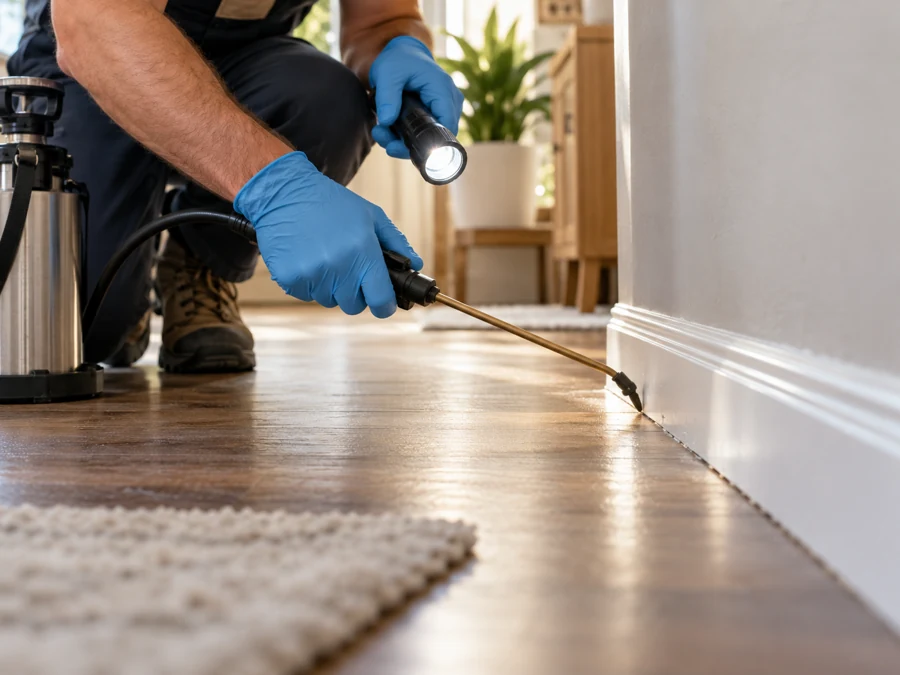
The best next step depends on the species, the location and whether the activity is ongoing. Describe the evidence, not just the name of a product you want sprayed.
Notice where insects enter, the time of day and any food or moisture source. Ask whether treatment covers entry points and follow-up monitoring—not only a one-time application.
Possible termite activity calls for an inspection suited to the structure and species. Avoid disturbing evidence before a professional evaluation, and clarify the treatment method and inspection findings.
Rodent work may combine inspection, exclusion and removal; ask how entry points will be identified and sealed and how contaminated areas should be handled.
Treatment can depend on breeding conditions and nest location. Do not approach nests that pose a sting hazard; describe the location and ask about species-specific outdoor control.
Choose a specific job for focused guidance, or call the main service line.
Three useful things to check before discussing a visit.
Several insects resemble termites. A professional inspection is the best way to confirm the pest and extent of concern.
A visible trail may be only part of an established colony; food sources, moisture, and entry paths also matter.
No. Species, property access, pets, children, and infestation extent shape safe treatment choices.
Find common repairs, installations and specialty work. Call to confirm what is available.
Examples of work to discuss, not a guarantee of provider coverage. Confirm availability, scope, licenses where required, and pricing.
Learn what to document and which questions to ask before arranging work.
Ask whether the specific work is available, and confirm scope and scheduling directly.


