Water stain after a Florida downpour
Document when water appears and which ceilings or walls are affected. A roofing inspection may cover flashing, penetrations and roof coverings; wet interiors may require restoration.
Roof wear, storm-related damage, and ceiling stains need the right inspection and repair plan.
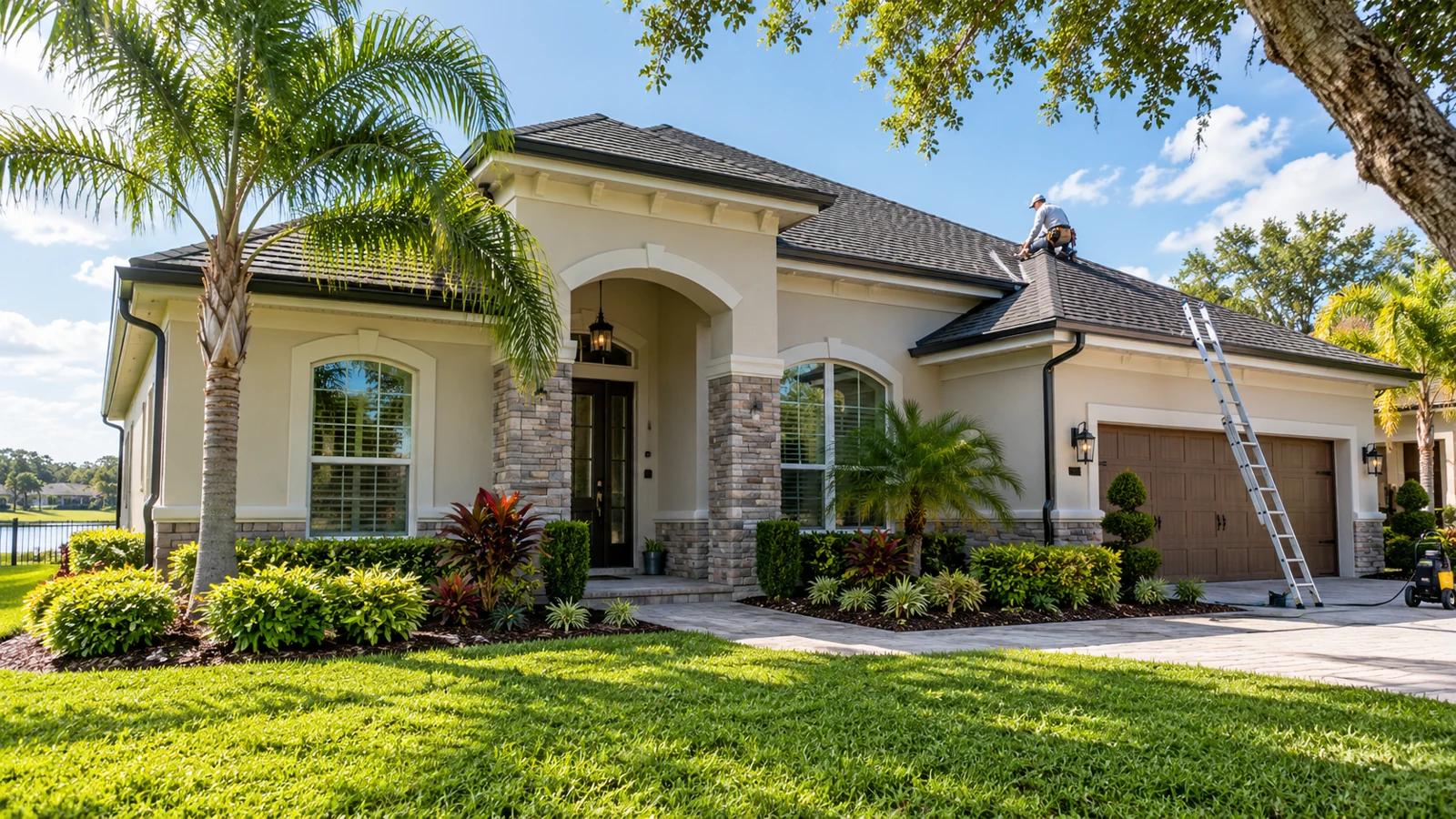
The location of a stain does not always reveal where rain entered. A roof assessment should identify the entry point, material condition and realistic repair options.
Document when water appears and which ceilings or walls are affected. A roofing inspection may cover flashing, penetrations and roof coverings; wet interiors may require restoration.
Photograph visible damage from a safe location on the ground. Do not climb onto a damaged roof; ask about temporary protection and repair options.
Compare an itemized repair scope against replacement considerations, including material life, ventilation, permits and warranties actually offered by the contractor.
Not every edge problem is a roofing defect. Gutters and downspouts should also be inspected where runoff is uncontrolled.
Keep these details nearby so your first call is more useful.
Not always. Local damage may be repairable, but broader wear or decking damage can change the scope.
Not necessarily. Water can travel along framing before a stain appears indoors.
Choose a specific job for focused guidance, or call the main service line.
Find common repairs, installations and specialty work. Call to confirm what is available.
Examples of work to discuss, not a guarantee of provider coverage. Confirm availability, scope, licenses where required, and pricing.
Florida sun, wind and heavy rain place ongoing demands on roofing materials. A ceiling stain, missing shingles or visible damage after a storm can signal a problem, but the source is not always directly above the stain. An inspection should distinguish localized repairs from broader roof condition concerns.
A roofing assessment may examine the covering, flashing, underlayment, penetrations and drainage. The proper work depends on the roof system and the underlying condition. Ask for clear photographs or findings, a written scope of repair, and information about permits and product compatibility. For a suspected active electrical or structural hazard, prioritize safety and appropriate emergency help.
Make a brief note of the problem, its location, and when it started. Photos can help you explain the condition, but do not enter an unsafe area to take them. Ask about the recommended scope, qualifications, costs and availability before choosing a service provider.
To discuss roofing needs in Apopka, call (407) 904-1223. Confirm the scope, expected cost and availability before arranging work.
Call (407) 904-1223 ↗Learn what to document and which questions to ask before arranging work.
Ask whether the specific work is available, and confirm scope and scheduling directly.